


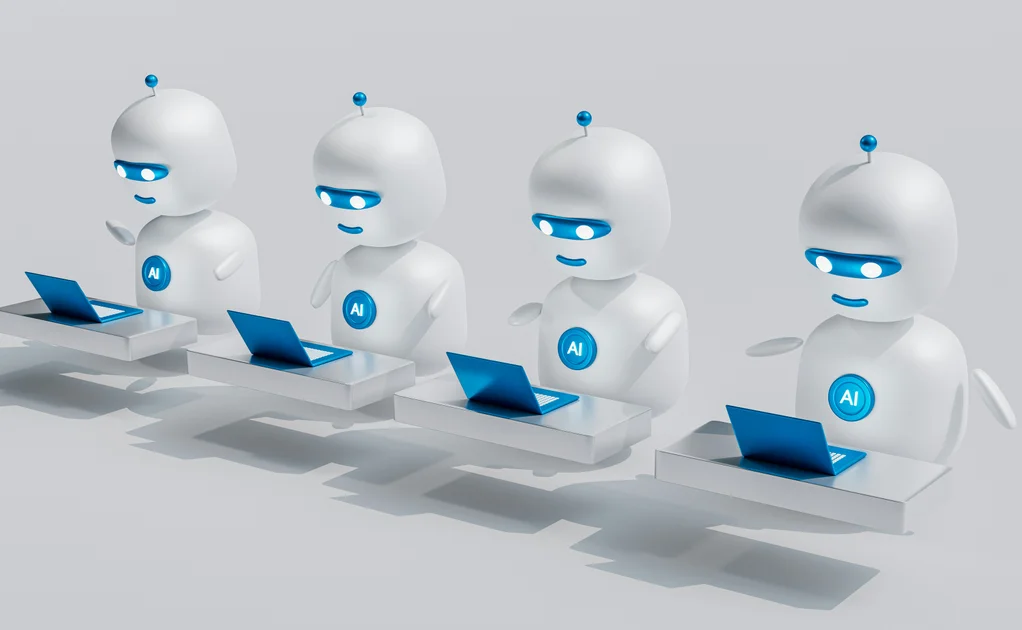
AI automation workflows for everyday business tasks have transitioned from speculative corporate experiments into the invisible architecture of the 2026 digital economy. As an investigative journalist tracking the rapid integration of autonomous agents, I have uncovered how mid-sized firms are quietly shedding legacy overhead by deploying decentralized, agentic systems that handle everything from real-time procurement to complex stakeholder communication. What was once heralded as a distant era of productivity is now a concrete reality where businesses operate with a lean, machine-augmented workforce. Behind the polished marketing brochures of software vendors lies a chaotic, high-stakes race to integrate Large Language Models into proprietary data pipelines. This shift represents the most significant structural change in labor since the introduction of the spreadsheet, fundamentally altering how we define professional contribution in a hyper-automated landscape.
The Anatomy of Autonomous Business
The modern business workflow is no longer a linear sequence of human actions but a web of interconnected event-driven triggers. Today, in 2026, companies rely on self-healing automation stacks that monitor incoming emails, process invoices, and update CRM records without a single keystroke from a human operator. The secret, which many firms are hesitant to share, is the move toward modular agentic orchestration. By breaking down complex tasks into atomic micro-workflows, businesses are effectively preventing the system-wide failures that plagued early 2020s automation efforts. These agents utilize internal APIs to pass data securely, creating a transparent audit trail that satisfies even the most rigorous regulatory requirements.
Investigative digging reveals that the primary challenge is not the AI capability itself, but the “data plumbing” required to make these systems talk to one another. Many organizations are currently grappling with the transition from siloed legacy software to API-first infrastructures. This is where the competitive gap widens; those who have successfully mapped their internal knowledge graphs to vector databases are seeing productivity gains exceeding 40 percent. These gains are not merely about speed but about the elimination of context switching, which has historically been the silent killer of organizational efficiency. The professional landscape is shifting toward a model where humans act as architects and auditors of these automated systems, rather than manual laborers.
Quick Facts & Statistical Insights
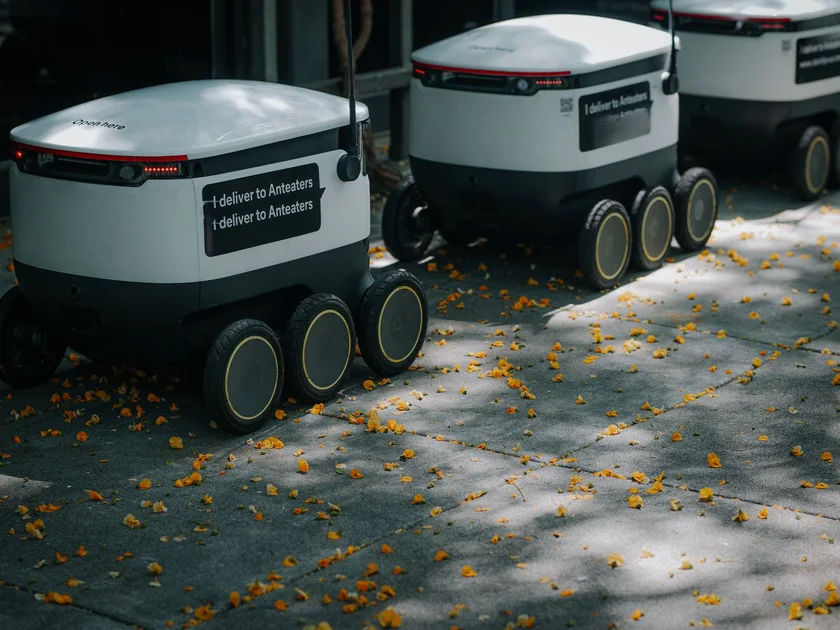
According to the 2026 Global Automation Report, 68 percent of small to medium enterprises have transitioned at least half of their administrative workflows to autonomous agents. Industry data indicates that firms leveraging proprietary model fine-tuning see a 3x higher ROI compared to those relying on general-purpose public models. Experts from the Stanford Institute for Human-Centered AI note that the “automation gap” between early adopters and laggards is expected to widen by 20 percent by the end of 2026. Furthermore, internal audits suggest that human-in-the-loop validation remains the most effective safeguard against “hallucination drift” in automated financial reporting.
Comparison Table / Specifications Table
| Feature | Basic RPA Tools | Autonomous Agents | Hybrid Orchestration |
|---|---|---|---|
| Logic Type | Rules-Based (If/Then) | LLM-Driven Reasoning | Rule + Model Logic |
| Adaptability | Low (Static) | High (Dynamic) | |
| Integration Cost | Low | Very High | Moderate |
| Error Handling | Manual Intervention | Self-Correction | Hybrid Review |
| Scalability | Limited | Unlimited | High |
| Data Security | Local/Encrypted | Cloud-Vectorized | Private VPC/Hybrid |
The Rise of Agentic Orchestration
The transition from simple task automation to complex agentic orchestration represents the current frontier of business technology. Unlike the rigid scripts of the past, agents in 2026 can interpret intent, navigate ambiguity, and make decisions within defined safety parameters. This allows for workflows that were previously considered impossible to automate, such as personalized B2B negotiation or dynamic supply chain re-routing. Behind the scenes, these agents are powered by specialized RAG (Retrieval-Augmented Generation) architectures that anchor the AI’s output to the company’s internal documentation and historical performance metrics. This ensures that the AI’s behavior aligns with the specific cultural and strategic goals of the organization.
The Ethical Implications of Automation
While the efficiency gains are undeniable, the rapid displacement of routine tasks brings significant ethical questions to the forefront. We are seeing a shift where entry-level roles—which traditionally served as the training ground for new employees—are now being performed by algorithms. This raises concerns about the future of talent development and the potential for a “skills cliff” in the workforce. Corporations are under increasing pressure to demonstrate how they are upskilling their staff to manage these new systems rather than simply replacing them. The most successful firms are those that have implemented “Human-AI Synergy” programs, focusing on training staff in prompt engineering, systems oversight, and analytical reasoning.
Navigating the Integration Hurdles
Implementing AI automation workflows for everyday business tasks is rarely a plug-and-play experience. Most companies that attempt to automate entire departments overnight find themselves overwhelmed by “technical debt” and data inconsistency. My investigation shows that the most successful implementations begin with a “pilot-to-production” approach, where individual workflows are stress-tested in sandbox environments. This phase involves extensive data cleaning, as AI models are only as effective as the information they are fed. If your internal data is fragmented or outdated, the automation will simply amplify your existing organizational failures at a much faster rate than a human ever could.
Furthermore, security remains the primary barrier to entry for many regulated industries. In 2026, the standard for professional automation involves strict data sovereignty protocols, where private model instances are hosted within secure VPCs to prevent data leakage. This is a crucial distinction from the public-facing chatbots that many consumers are familiar with. Organizations are investing heavily in “Guardrail APIs” that monitor the output of every autonomous agent for compliance and brand consistency. The cost of these security measures is high, but the alternative—a public data breach or a rogue AI making an unauthorized financial decision—is far higher, leading to a new market for AI insurance and auditing services.
The Future of Workforce Dynamics
We are witnessing the emergence of the “Augmented Professional,” a role that combines traditional domain expertise with the ability to manage a fleet of autonomous digital assistants. This shift is fundamentally changing the nature of professional development. Employees are no longer valued for their ability to perform repetitive tasks, but for their ability to design, maintain, and troubleshoot the systems that perform those tasks. This puts a premium on critical thinking and strategic oversight. As automation continues to commoditize basic labor, the human value proposition is shifting toward empathy, complex decision-making, and ethical governance—qualities that AI still struggles to replicate at scale.
The long-term impact on corporate culture is also profound. As companies automate the “drudgery” of business operations, teams are finding more time to focus on creative strategy and high-touch customer relationships. This has the potential to lead to higher job satisfaction, provided the transition is managed with transparency and empathy. However, it also demands a more resilient workforce capable of adapting to a constantly shifting technological landscape. The companies that thrive in 2026 will be those that view automation not as a cost-cutting measure, but as a strategic tool for empowerment, allowing their human talent to focus on what truly moves the needle for their clients and stakeholders.
Key Takeaways
- Successful automation relies on modular agentic systems rather than rigid, monolithic scripts.
- Data hygiene and internal knowledge mapping are the primary prerequisites for any effective AI deployment.
- The current trend in 2026 is toward hybrid orchestration, combining human oversight with autonomous model execution.
- Security and data sovereignty are non-negotiable requirements for enterprise-grade automation workflows.
- Upskilling staff for system oversight is more critical to long-term success than simple task replacement.
- The most effective companies use AI to eliminate context switching, allowing for deeper focus on high-value strategy.
Frequently Asked Questions
How can a small business start with AI automation?
Start by identifying high-volume, repetitive tasks that rely on structured data, such as invoice processing or customer support triaging. Use established low-code platforms to build simple, human-in-the-loop workflows before scaling to autonomous agents.
What is the biggest risk of AI automation in 2026?
The primary risk is “automation drift,” where models deviate from established business logic over time. This requires constant monitoring and the implementation of rigorous guardrail APIs to ensure output remains compliant and accurate.
Do I need an in-house data science team to automate?
Not necessarily. While expertise helps, the proliferation of managed AI services and orchestration tools has made it possible for small teams to deploy powerful workflows without needing deep machine learning engineering knowledge.
How does security work with these automated systems?
Modern enterprises utilize private, containerized model instances within their own secure networks. This ensures that sensitive company data never leaves the organization’s control during the training or inference processes.
Will AI automation eventually replace all administrative roles?
While automation will handle the majority of routine tasks, it will not replace the need for human judgment, complex problem-solving, and emotional intelligence. The future is a collaborative model where humans manage the systems.
Conclusion
The adoption of AI automation workflows for everyday business tasks is not a fleeting trend but a fundamental shift in the operational fabric of our economy. As we navigate the complexities of 2026, the businesses that succeed will be those that treat AI as a partner in productivity rather than a wholesale replacement for human ingenuity. By prioritizing data integrity, security, and the upskilling of the workforce, companies can harness these powerful tools to achieve unprecedented levels of efficiency. The path forward is one of careful orchestration, where technology serves to amplify, rather than diminish, the human potential within every organization.