


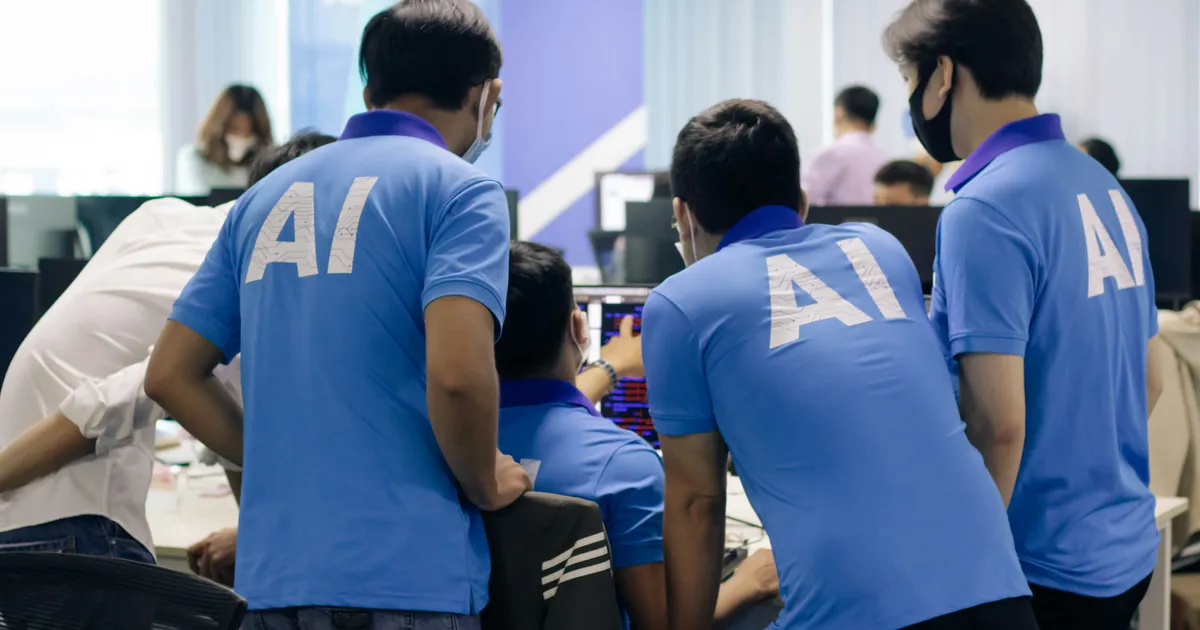
I remember a time, not so long ago, when the idea of AI drafting a coherent email, let alone an entire blog post, felt like science fiction. Now, as a content professional with over a decade in the trenches, I’ve watched this “fiction” rapidly become an indispensable part of our daily workflow. The question isn’t if AI will change jobs and digital work in coming years, but how profoundly and how quickly. It’s a transformation that demands our attention, not with fear, but with a strategic mindset, understanding that the future of work isn’t about humans versus machines, but humans with machines.
AI as an Augmentation, Not a Replacement
One of the most pervasive myths about AI is that it’s coming to take all our jobs. While it’s true that AI will automate many repetitive and data-intensive tasks, its primary role will be one of augmentation. Think of it as a powerful co-pilot, handling the monotonous legwork, freeing human professionals to focus on higher-order thinking, creativity, and strategic decision-making. This shift isn’t about making humans obsolete; it’s about making human work more impactful and less tedious. By 2026, many digital roles will see AI as a default assistant.
For instance, in digital marketing, AI can analyze vast datasets to identify optimal ad placements, predict consumer behavior, or even generate initial drafts of ad copy. This doesn’t eliminate the need for a human marketer; instead, it empowers them to craft more nuanced campaigns, interpret complex insights, and connect with audiences on a deeper, more emotional level. The human touch in storytelling, brand voice, and ethical considerations remains paramount, elevating the role of the strategist and creative director.
The Rise of AI-Powered Tools in Digital Work
Across the digital landscape, AI-powered tools are already reshaping how we operate. Content writers use AI to brainstorm ideas, refine grammar, and even generate initial article outlines, significantly speeding up the creation process. SEO specialists leverage AI for keyword research, competitor analysis, and identifying content gaps with unprecedented efficiency. Graphic designers find AI generative tools helpful for concept exploration and producing variations, while coders use AI assistants to debug or suggest code snippets, accelerating development cycles. The integration is widespread and growing.
These tools aren’t just about speed; they’re about precision and scale. A human team might spend days on market research that an AI can complete in hours, synthesizing trends and identifying opportunities that might otherwise be missed. The differentiator for digital workers in the coming years will be their ability to skillfully wield these tools, understanding their strengths and limitations, and integrating them seamlessly into complex workflows. It’s about becoming a conductor of digital symphonies, with AI playing many of the instruments.
Skill Transformation and Lifelong Learning
The advent of AI means that the skills valued in the digital workforce are rapidly evolving. Memorization and rote task execution are becoming less critical, while abilities like critical thinking, problem-solving, creativity, and emotional intelligence are soaring in importance. Understanding how to prompt AI effectively – often called “prompt engineering” – is becoming a crucial skill, allowing professionals to extract the most valuable outputs from these sophisticated systems. This isn’t just a technical skill; it requires a deep understanding of context and desired outcomes.
Adaptability, therefore, is the new currency. Professionals who embrace a mindset of continuous learning and are willing to re-skill or up-skill will thrive. Educational institutions and corporate training programs will need to pivot quickly to offer relevant curricula, focusing on human-AI collaboration, ethical AI use, and data literacy. As the landscape shifts, those who view learning as a marathon, not a sprint, will be best positioned to navigate the changes and seize new opportunities. The World Economic Forum highlights these adaptive skills as critical for the future.
Navigating the Skill Gap
The rapid pace of AI development inevitably creates a skill gap. Many existing job roles require new competencies that weren’t taught a few years ago. This gap poses a significant challenge for individuals and organizations alike, as businesses struggle to find talent capable of leveraging AI effectively, and workers worry about their relevance. Bridging this gap requires proactive measures, including government initiatives for workforce retraining, accessible online learning platforms, and companies investing heavily in their employees’ development.
Micro-credentials and specialized certifications will become increasingly important, allowing individuals to quickly acquire targeted skills without committing to lengthy degree programs. The focus will be on practical application and hands-on experience with AI tools. Employers who foster a culture of learning and provide resources for skill development will not only retain top talent but also build a resilient workforce ready for the challenges and opportunities that AI presents by 2026 and beyond.
New Job Roles Emerge
While some roles will undoubtedly transform, AI also acts as a catalyst for the creation of entirely new job categories. We’re already seeing the rise of “AI Trainers” who teach models to perform specific tasks, “Prompt Engineers” who specialize in crafting effective AI queries, and “AI Ethicists” who ensure AI systems are fair, transparent, and unbiased. Data scientists and machine learning engineers will remain in high demand, but new roles focused on the interaction and integration of AI will proliferate.
Consider the role of “AI Content Strategists” who don’t just write, but orchestrate AI-generated content with human refinement to achieve specific marketing goals. Or “AI Compliance Officers” who ensure AI systems adhere to regulatory standards. These new roles emphasize the uniquely human attributes of oversight, judgment, and creativity. AI will handle the processing power, but humans will provide the purpose, the direction, and the moral compass, ensuring technology serves humanity’s best interests.
Economic and Societal Shifts
The widespread adoption of AI is poised to bring about significant economic and societal shifts. On the economic front, we can anticipate substantial productivity gains across industries, leading to economic growth and the potential for new markets. AI’s ability to automate and optimize processes can reduce costs, improve efficiency, and accelerate innovation. However, these gains also raise critical questions about wealth distribution and the potential for increased inequality if not managed thoughtfully. McKinsey’s research underlines this potential.
Societally, the transformation of work will necessitate new social safety nets and educational paradigms. Governments and policymakers will need to proactively address concerns about job displacement, potentially exploring initiatives like universal basic income or robust retraining programs. The ethical implications of AI, from data privacy to algorithmic bias, will become central to public discourse. Ultimately, how we collectively choose to govern and integrate AI will determine whether its profound capabilities lead to a more equitable and prosperous future for all.
Key Takeaways
- AI as an Augmentation Partner: AI will primarily enhance human capabilities by automating repetitive tasks, allowing digital workers to focus on creative, strategic, and interpersonal aspects of their roles, rather than replacing them entirely.
- Skill Adaptation is Crucial: The most valuable skills will shift towards critical thinking, creativity, problem-solving, and “prompt engineering.” Lifelong learning and adaptability will be essential for navigating the evolving digital work landscape.
- Emergence of New Job Categories: AI will create numerous novel job roles, such as AI trainers, ethicists, and specialized strategists who manage and refine AI outputs, underscoring the enduring need for human oversight and direction.
- Profound Economic & Societal Impact: While promising significant productivity gains, AI’s integration will also necessitate careful policy considerations regarding job displacement, ethical governance, and equitable wealth distribution to ensure a beneficial societal transition.
Frequently Asked Questions
Will AI take all our jobs in digital work?
No, the consensus among experts is that AI will transform jobs rather than eliminate them entirely. Many roles will evolve, requiring new skills and focusing more on human strengths like creativity, critical thinking, and emotional intelligence, as AI handles routine tasks.
What are the most important skills to develop for the AI era?
Key skills include critical thinking, problem-solving, creativity, emotional intelligence, and adaptability. Understanding how to effectively use and “prompt” AI tools (prompt engineering) will also be highly valuable across many digital professions.
Is it too late to learn about AI and adapt my career?
Absolutely not. The AI revolution is still in its early stages, and continuous learning is key. Many resources, from online courses to certifications, are available to help professionals understand AI’s applications and develop relevant skills. It’s an ongoing journey.
How quickly will these changes impact the digital work landscape?
The changes are already underway and will continue to accelerate. While some shifts will be gradual, many digital sectors will experience significant transformations within the next 3-5 years, making proactive adaptation crucial for professionals and businesses alike.
Conclusion
The narrative around AI and jobs often swings between utopian visions and dystopian fears. My experience tells me the reality is far more nuanced, a dynamic evolution rather than a sudden revolution. AI is a powerful tool, a mirror reflecting our intentions and ingenuity. For digital work, it promises a future where human potential is amplified, where tedious tasks recede, and creativity can truly flourish. Embracing continuous learning, fostering adaptability, and prioritizing ethical considerations will be our roadmap to navigating this exciting, transformative journey. The future of work isn’t just arriving; we’re actively building it, together with AI.