


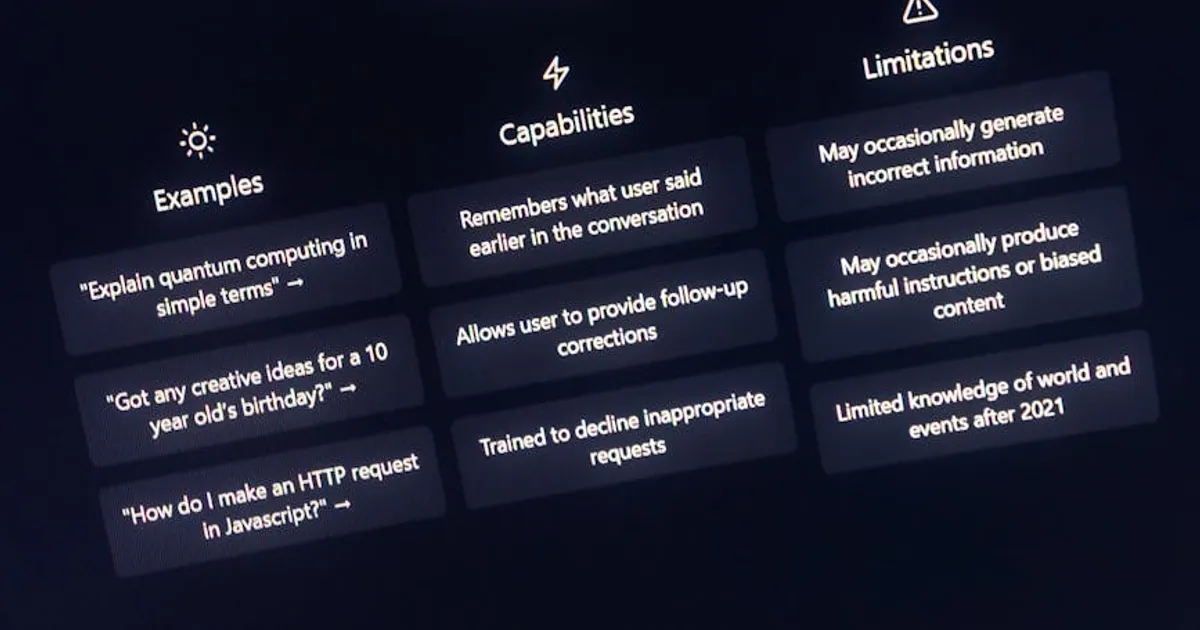
Crafting human-style content with AI tools like ChatGPT requires more than just basic prompts; it demands an understanding of advanced techniques that can coax the language model into producing writing that resonates with readers. The key lies in designing intricate prompts that provide context, define the desired tone, and guide the AI’s creativity in a way that minimizes robotic or formulaic output. This article is your guide to unlocking the full potential of ChatGPT. By mastering these strategic approaches, you’ll be able to leverage AI to create compelling, engaging content that sounds like it was written by a real person, enhancing user experience and credibility.
Define Your Audience and Purpose
Before you even begin crafting your ChatGPT prompts, it’s essential to define your target audience. Understanding their demographics, interests, and level of knowledge is critical. For example, are you writing for marketing professionals or for the general public? Is the purpose of your content to inform, persuade, or entertain? Once you’ve clearly outlined your audience and purpose, you can tailor your prompts to align with their expectations and preferences. This foundation is what transforms generic AI-generated text into something relevant and engaging.
Consider specifying the reading level you want the response to match: “Write this explanation for a 10-year-old” provides a more accessible result than if you leave it unsaid. Similarly, providing information about the reader’s background context helps ensure the AI avoids jargon or explains complex topics effectively. By setting these parameters at the outset, you’ll get far better results that suit the audience’s existing understanding.
Specify Tone and Style
One effective method of mimicking human writing is to explicitly specify the desired tone and style in your prompts. Instead of just asking ChatGPT to “write about climate change”, try specifying “write a persuasive article about climate change in a passionate and urgent tone, aimed at young adults.” You can also emulate the writing style of a particular author or brand. For example, “Write a product description in the style of Seth Godin” or “Write a short story with the same tone as Ernest Hemingway”.
Including specific examples of the type of writing style you’re looking for can be particularly helpful. Offer snippets from existing articles with the tone you want to capture. Instructions like “Maintain a conversational tone, similar to a blog post” or “Use a formal, academic tone as found in a research paper” can significantly guide the AI. Experimenting with variations in tone and style can help fine-tune ChatGPT’s output, ultimately leading to a more human-sounding piece of content.
Provide Context and Background Information
Without context, ChatGPT can produce generic and superficial content. Supplying relevant information and background details will lead to more nuanced and informed outputs. For instance, if you’re writing about a new technology, include details about its development, key features, and potential applications. The more information you provide, the better equipped ChatGPT will be to generate high-quality content. This might mean adding 2-3 background paragraphs or even linking your prompt to a relevant web document.
Imagine you are tasking someone to write a summary report for the 2026 World Cup. If all you told them was to “write a summary report for the World Cup” you’d likely get a very generic response. But, if you gave them access to team statistics, news articles about the event, and even specific points to investigate, it would vastly improve the final summary. ChatGPT works the same way – feeding it detailed context lets it better understand the task and its scope.
Use Persona-Based Prompts
Another advanced technique is to use persona-based prompts. This involves directing ChatGPT to adopt a specific persona, such as “a seasoned marketing executive” or “a renowned physicist”. When you give the AI a persona, it will generate content that aligns with that individual’s expertise, perspective, and communication style. This can make the content more engaging and credible, as it appears to come from a knowledgeable source. Specify characteristics like age, profession, and even personality traits to further refine the persona.
For example, “Write a blog post about the future of AI from the perspective of a cynical but experienced software engineer” will yield significantly different results than a general prompt. This technique helps the AI incorporate realistic viewpoints and thought processes into its writing, simulating a real person’s approach. The clearer the persona, the more convincing and personalized the final text will be.
Example Persona Prompt
Here’s how to construct a persona-based prompt. “You are a seasoned travel blogger with over ten years of experience writing about luxury travel destinations. You have a sophisticated, yet approachable tone, and you infuse your writing with personal anecdotes and vivid descriptions. Write a review of a five-star hotel in the Maldives, highlighting its unique amenities and exceptional service.”
Incorporate Storytelling Techniques
Humans naturally connect with stories. To make your AI-generated content more relatable, incorporate storytelling techniques into your prompts. Instead of just presenting facts and figures, ask ChatGPT to create narratives, share anecdotes, or develop characters. Start your prompt by asking the AI to build a story around a particular topic. This might involve creating fictional or representative characters or scenarios.
Prompting ChatGPT to “Tell a story about a small business owner who successfully implemented a new marketing strategy” will produce more engaging content than simply requesting a list of marketing strategies. You can also use prompts that encourage the AI to use metaphors, similes, and other literary devices. Adding a narrative element not only captures attention but also helps to convey complex ideas in a memorable way, making the generated text more accessible and human-like.
Iterate and Refine
Generating truly human-sounding content typically requires several iterations. Don’t expect to get the perfect result on the first try. Review the initial output carefully and identify areas that need improvement. Then, adjust your prompts accordingly and regenerate the content. Experiment with different phrasing, add more specific instructions, or change the desired tone and style. This iterative process allows you to gradually refine the output until it meets your exact requirements.
This process of review and refinement is critical. For instance, if ChatGPT’s response is too formal, a prompt like “Make the tone more conversational and less formal” can help. Similarly, if the AI repeats information too much, instruct it to “Be more concise and avoid unnecessary repetition.” Over time, you’ll refine your prompt engineering skills, gaining a much better understanding of how to guide ChatGPT towards the type of text you’re seeking. Continue refining your prompts to align with your particular preferences and goals.
Key Takeaways
- Clearly define your target audience and the intended purpose of your content.
- Specify the desired tone and style using vivid descriptors and examples.
- Provide ample context and background information to guide ChatGPT’s understanding.
- Employ persona-based prompts to inject a human perspective into the output.
- Incorporate storytelling techniques to make the content more relatable and engaging.
- Iterate and refine your prompts based on the AI’s initial outputs.
Frequently Asked Questions
How can I prevent ChatGPT from sounding too robotic?
Use precise language that includes specifics about tone, style, and targeted emotion. Also ensure the AI has enough context so it isn’t just repeating generic phrases.
What’s the best way to specify the desired tone in a prompt?
Include adjectives that clearly convey the tone you’re aiming for, such as “urgent,” “humorous,” “scholarly,” or “compassionate.” Provide a sample excerpt that exemplifies the tone further.
Can ChatGPT truly emulate a specific writing style like that of a famous author?
While it can come close, achieving a perfect imitation is challenging. It will respond in generalities based on known data, but you can help by providing examples of the author’s written wording.
Is it ethical to use AI to create content that sounds like it was written by a human?
The key is transparency. Clearly disclose that AI was used in the content creation. Misleading audiences is unethical, but AI as a writing tool is not.
How often should I iterate on my prompts to get the desired results?
The ideal number of iterations varies by assignment, but at least 2-3 is a good start. Each iteration allows you to refine based on previous outputs.
Conclusion
By mastering the sophisticated strategies outlined, you can harness ChatGPT’s capabilities to craft content that is both powerful and genuinely human. Precision in your prompts, combined with an iterative approach, will unlock a new level of content creation. As we move further into 2026, the ability to generate high-quality, human-sounding text with AI will become an increasingly valuable skill. Continue to experiment with these approaches to discover new ways to integrate AI into your content creation workflow and produce outstanding work that resonates deeply with your audience.